
Comprehensive Fire Damage Guide
- Free Claim Review
- 1. Fire Damage Claims: The Truth About Rebuilding and Representation
- 2. The Blunt Truth Summary (BLUF)
- 3. What Actually Happens During a Fire Damage Claim
- 4. Immediate Action Steps to Protect Your Property
- 5. Common Traps and Tactics Insurance Companies Use on Fire Claims
- 6. The Roles: Independent Adjuster vs. Public Adjuster
- 7. The Empirical Data: Why Outcomes Differ So Drastically
- 8. Public Adjuster Pros and Cons for Fire Damage
- 9. Hidden Fire and Smoke Damage You Are Probably Missing
- 10. When is the Right Time to Hire a Fire Damage Public Adjuster?
- 11. Understanding Policy Limitations, Loopholes, and the Fine Print
- 12. The Financial Reality: Fees vs. Value Added
- 13. How to Vet and Find a Legitimate Fire Damage Public Adjuster
- 14. Real-World Scenario: The "Just a Kitchen Fire" Case
- 15. The Step-by-Step Public Adjuster Process
- 16. Frequently Asked Questions About Fire Claims
- 17. Next Steps: Securing a Free, No-Obligation Claim Review
- Free Claim Review
1. Fire Damage Claims: The Truth About Rebuilding and Representation
A structural fire is the most traumatic event a homeowner can face. Beyond the emotional toll of losing personal history, there is the immediate shock of displacement. You are standing outside a house that no longer feels like home, smelling the acrid smoke, and wondering how you will ever make it right again.
It is in these chaotic first hours that your insurance company will send out an adjuster.
Fire Damage by the Numbers
They will be polite. They will offer immediate assurances. But what most homeowners do not realize until it is too late is that fire damage is rarely limited to what you can see. The visible char is only the beginning. Invisible smoke, toxic soot, and firefighting water damage often account for up to 60% of the true restoration costs.
When you file a fire claim, the insurance company's goal is to minimize its financial exposure. Don't let your recovery be compromised by an underfunded settlement.
2. The Blunt Truth Summary (BLUF)
If your home has suffered a fire, do not assume a quick check from your insurance company covers your actual loss. Insurers frequently push to "clean and deodorize" rather than fully replace smoke-compromised materials like drywall, insulation, and HVAC systems. Over time, that acidic soot will corrode your electronics, degrade your home's framing, and leave a permanent odor.
A licensed public adjuster is the only professional legally authorized to represent your financial interests against the insurance company. They bring in independent content specialists, structural engineers, and industrial hygienists to document every hidden loss and force the insurer to pay for a true, total restoration at today's labor rates.
3. What Actually Happens During a Fire Damage Claim
When you file your claim, the insurance company initiates a process designed to control costs from day one. Here is the reality of what happens behind the scenes:
The Initial Scope of Loss The insurer dispatches a staff or independent adjuster to your property. Their mandate is to perform a rapid "scope of loss." In major fires, this adjuster is often managing a heavy caseload and will rely heavily on visual inspection. They walk through the property, taking photos of the obvious charring and structural damage. What they often miss - or intentionally exclude - is the secondary damage.
The "Restoration" Contractors Often, the insurer will strongly recommend you use one of their "preferred vendor" restoration companies. These companies sign contracts agreeing to work at discounted rates for the insurer. Their allegiance is split. If they find an extra $30,000 in necessary soot remediation behind your walls, they have a disincentive to fight the insurer to approve it.
The Depreciation Trap Once the estimate is complete, the insurance company will apply aggressive depreciation to your property. They will argue that your 10-year-old roof or 5-year-old kitchen cabinets are only worth a fraction of their replacement cost. You are suddenly expected to rebuild a modern home using a severely discounted payout.
The Delay Game Fire claims are expensive, complex, and require multiple layers of approval within the insurance company. Delay becomes a tactic. While you are living in a hotel and burning through your Additional Living Expenses (ALE) coverage, the insurer will demand multiple rounds of documentation, hoping you experience "claim fatigue" and accept a lowball offer just to move on with your life.
4. Immediate Action Steps to Protect Your Property
Before any adjuster begins negotiating numbers, you have strict contractual obligations under your policy. If you fail to meet them, the insurer can use your inaction as grounds to deny portions of your claim.
1. Secure the Property Immediately Your policy requires you to "mitigate further damage." This means you must board up broken windows, tarp any compromised sections of the roof, and secure the doors to prevent weather intrusion or vandalism/looting. Keep all receipts for this emergency work; it is reimbursable under your policy.
2. Demand an Advance for Immediate Needs If your home is uninhabitable, you need clothes, toiletries, and shelter immediately. Request a cash advance against your Additional Living Expenses (ALE) coverage. The insurer should provide this quickly so you can secure a secure place to stay while the claim is processed.
3. Do NOT Begin Deep Cleaning or Throwing Things Away This is the most common and costly mistake homeowners make. Do not attempt to wipe soot off the walls or throw away charred furniture. If the insurance adjuster has not physically seen and documented the damage, they will not pay for it. The debris is your evidence. Keep everything exactly as it is until a comprehensive inventory is complete.
4. Document the Aftermath Extensively Before anyone touches the scene, take hundreds of photos and videos. Walk through every room, narrating what you see. Open closets and drawers to document soot penetration. Photograph the ceilings, the floors, and the exterior.
5. Do Not Sign Away Your Rights (AOBs) Emergency restoration companies will inevitably show up at your house offering to handle everything. Many will ask you to sign an "Assignment of Benefits" (AOB) contract. Signing an AOB legally transfers control of your insurance claim to that contractor. Never sign an AOB without consulting an independent professional first.
5. Common Traps and Tactics Insurance Companies Use on Fire Claims
If you have never navigated a major insurance claim before, it is easy to assume the process is straightforward: your home is damaged, the insurance company assesses the cost, and they cut a check. The reality is that insurance companies are massive financial institutions. Their primary fiduciary responsibility is to their shareholders, not their policyholders.
Understanding the tactics used to minimize fire claim payouts is your first line of defense.
| Damage Type | Insurance Adjuster Goal | Public Adjuster Solution |
|---|---|---|
| Smoke on Drywall | Wash & use "odor encapsulant" paint | Full Replacement |
| HVAC Contamination | Basic $300 duct cleaning service | Full HVAC Replacement |
| Structural Heat Stress | Visual inspection only (ignoring warp) | Forensic X-ray & Repair |
The "Cleaning vs. Replacing" Tactic Smoke is not just dirty; it is highly acidic and corrosive. When smoke permeates a home, it settles on electronics, inside wall cavities, and deep into the fibers of carpets and insulation. A common tactic is for insurers to approve "cleaning and deodorizing" smoke-damaged drywall and insulation. Painting over soot does not neutralize the chemical degradation. Months later, when the "smoke odor encapsulant" fails and the smell returns, the claim is already closed.
The Partial Repair Strategy Fire damage creates "line of sight" disputes. If half of your kitchen cabinets are destroyed by fire, but the manufacturer no longer makes that exact finish, you are left with two options: accept a mismatched kitchen or fight for a full replacement. Insurers routinely attempt to pay only for the directly burned items, ignoring the policy provisions that require them to restore the home to a uniform, pre-loss condition.
The Preferred Vendor Trap Your insurance company may aggressively recommend their "preferred" restoration contractors. These companies are vetted by the insurer, but often because they agree to strict pricing caps and utilize software estimating guidelines that favor the carrier. While many of these contractors do acceptable cosmetic work, their financial loyalty belongs to the insurance company that feeds them endless leads, not the homeowner.
6. The Roles: Independent Adjuster vs. Public Adjuster
When managing a fire claim, you will interact with different types of adjusters. Misunderstanding who works for whom is one of the most expensive mistakes a policyholder can make.
The Insurance Company's Adjuster (Staff or Independent) When you call your insurance company, they will assign an adjuster to your case. This person may be a direct employee (a "staff adjuster") or a contractor hired for the season (an "independent adjuster"). The title "independent" is highly misleading. They are independent contractors, but they are hired, paid, and evaluated by your insurance company. Their job is to protect the insurer's financial interests by settling the claim efficiently and within strict company payout guidelines.
The Public Adjuster (Your Advocate) A public adjuster is the only insurance professional licensed by the state Department of Financial Services to represent you, the policyholder. They do not work for the insurance company. They work exclusively for you. Their job is to read your policy, independently assess the true scope of the fire and smoke damage, and aggressively negotiate with the insurance company's adjuster to ensure you receive every dollar you are legally entitled to.
Think of it like a tax audit: the insurance adjuster is the IRS agent. The public adjuster is your CPA. You would never let the IRS dictate your taxes without your own expert representation.
7. The Empirical Data: Why Outcomes Differ So Drastically
Why do homeowners need an advocate? Cannot a motivated, organized homeowner simply negotiate with the insurance company themselves?
The data suggests otherwise. The claims process is an asymmetrical negotiation. The insurance company handles thousands of fire claims every year; this is likely your first. They use proprietary estimating software (like Xactimate) and employ teams of attorneys.
The Office of Program Policy Analysis and Government Accountability (OPPAGA), the research arm of the Florida Legislature, conducted a massive, independent study on insurance claim payouts. The results were staggering.
The OPPAGA study found that policyholders who hired a public adjuster for non-catastrophic claims received settlements that were, on average, 574% higher than those who handled the claims themselves. For catastrophic claims, the difference was even more dramatic: represented policyholders received settlements over 7x higher.
The math is undeniable. Removing the asymmetry by hiring a licensed expert forces the insurance company to pay the true value of the loss, rather than the lowest acceptable initial offer.
8. Public Adjuster Pros and Cons for Fire Damage
Transparency is critical when making decisions about your home. Hiring a public adjuster is a partnership, and like any partnership, it comes with distinct advantages and a few trade-offs.
The Pros of Hiring a Fire Damage Public Adjuster
- Significantly Higher Settlements: As the data shows, professional representation routinely results in payouts that dwarf unrepresented claims by factoring in hidden soot, water-damaged subflooring, and proper material valuation.
- Zero Upfront Costs: Public adjusters work on a contingency fee basis. They do not charge retainers or hourly rates. They only get paid a percentage of the final settlement they secure for you.
- Leveling the Playing Field: They speak the specific, technical language of insurance policies and utilize the exact same estimating software (Xactimate) the carriers use, completely neutralizing the insurer's typical advantage.
- Stress Reduction: They handle all emails, phone calls, endless documentation requests, and on-site meetings with the insurer, allowing you to focus on your family, your job, and your life.
The Cons of Hiring a Fire Damage Public Adjuster
- The Contingency Fee: The primary trade-off is financial. A public adjuster will take a percentage of the total settlement (typically 10% to 20%, depending on the state and the size of the loss). However, because they routinely secure settlements hundreds of percentages higher than initial offers, the net payout to the homeowner is almost always substantially greater even after the fee is paid.
- The Timeline: A public adjuster will not rush to close your file in a week. They take the necessary time to bring in structural engineers, industrial hygienists, and contents specialists to document the true scope of the loss. This thoroughness means the process can take longer than simply accepting the insurer's fast, first offer.
9. Hidden Fire and Smoke Damage You Are Probably Missing
When assessing a fire claim, homeowners often look right where the flames stopped. But fire is a dynamic, expansive peril, and the true cost of restoration is almost always hidden in the areas that look outwardly pristine but are chemically compromised.
The Invisible Corrosive: Toxic Soot Soot and smoke are highly acidic. When a fire burns, synthetic materials (plastics, foam insulation, PVC piping) release highly toxic, electrically conductive soot. This particulate matter travels far beyond the fire's origin point. It settles inside wall cavities, electrical outlets, and deep within the fibers of carpets thousands of feet away. If simply "wiped down" rather than properly mitigated or replaced, this soot will slowly corrode electronics, weaken plumbing, and degrade the structural framing of your home over months or years.
The HVAC Contamination Loop Your central air conditioning system effectively acts as a toxic delivery mechanism during a fire. It inhales smoke and hot soot, depositing it deep inside the ductwork, coils, and blowers. If untreated, the system will blow carcinogenic particulate matter throughout the home every time it cycles on. Insurance companies routinely omit full HVAC replacement from estimates, proposing a simple "duct cleaning" that leaves dangerous residue embedded in the system.
The Secondary Peril: Hydro Loss and Mold It is devastatingly ironic, but the water used to save your home often destroys what the fire didn't. High-pressure hoses inject thousands of gallons of water into a structure in minutes. This water pools in subfloors, ceiling cavities, and basements. If the property is not immediately and aggressively dried using commercial desiccant dehumidification, catastrophic mold blooms can begin in as little as 48 hours, triggering entirely new policy exclusions and caps.
Structural Heat Stress A material does not have to burn to be destroyed. Intense thermal conditions can weaken steel beams, causing them to warp or lose tensile strength. It can crack masonry and compromise the concrete foundation. A proper fire loss requires a forensic structural engineer to certify the integrity of the remaining framing, a step standard field adjusters aggressively avoid taking.
10. When is the Right Time to Hire a Fire Damage Public Adjuster?
The short answer is: as rapidly as possible after the emergency responders have cleared the scene. Understanding the timeline of a claim illustrates exactly why early intervention is so critical.
The Pre-Filing Window (The Ideal Stage) Hiring an adjuster before or immediately after notifying your insurance carrier is the strategic ideal. The public adjuster can control the initial narrative, prevent you from accidentally making statements that prejudice your claim (such as guessing the cause of the fire), coordinate the emergency board-up and dry-out procedures to ensure they comply with your policy, and be present for the insurer's very first inspection.
The Post-Inspection Window If the insurer has already been to the property and you are waiting on their estimate, it is not too late. A public adjuster will immediately draft a comprehensive, independent Xactimate estimate to serve as a high-ground anchor point for negotiations before you accept any partial payments.
The Lowball Offer or Denial Stage Even if you have already received a check that you know is insufficient, or if the insurer has denied portions of the claim citing "wear and tear" or "pre-existing conditions," a public adjuster can step in. They specialize in reopening previously settled or underpaid claims, using forensic evidence to prove the carrier's estimate was flawed or made in bad faith.
11. Understanding Policy Limitations, Loopholes, and the Fine Print
Your insurance policy is a dense, highly nuanced legal contract. Insurance adjusters are trained to find the language within it that limits their employer's liability. You need an expert who knows how to find the language that guarantees your recovery.
Actual Cash Value (ACV) vs. Replacement Cost Value (RCV) Even if you hold an RCV policy, your insurer will likely write your initial settlement check at ACV. This means they apply steep depreciation to your damaged property. For example, if a custom kitchen costs $50,000 to replace, they may only pay you $25,000 upfront, claiming the old cabinets were fully depreciated. They hold back the remaining $25,000 until you prove you have incurred the cost to replace them. A public adjuster manages these "recoverable depreciation" timelines to ensure you never forfeit funds you are owed.
Ordinance and Law (Code Upgrade) Coverage Building codes evolve. If your 1980s home burns down, you cannot legally rebuild it to 1980s standards; you must bring it up to current municipal electrical, plumbing, and safety codes. Standard dwelling coverage does not pay for these upgrades. You must invoke the specific "Ordinance and Law" provision in your policy to force the insurer to cover the massive additional costs of modern compliance.
Additional Living Expenses (ALE) Restrictions While your home is uninhabitable, your insurer is required to pay for your hotel, meals, and temporary housing. However, insurers routinely put aggressive caps on *how long* they will pay these expenses, or they offer "comparable" housing that is completely inadequate for your family's needs. We negotiate your ALE directly to ensure you maintain your standard of living while we fight the underlying property claim.
12. The Financial Reality: Fees vs. Value Added
The most common hesitation homeowners have is the cost. Why pay a percentage of your settlement to a public adjuster when you can handle the claim yourself for "free"?
It is a completely rational question that requires a purely mathematical answer.
The Contingency Model Public adjusters operate on a strictly contingency-fee basis. This means there are zero upfront costs or hourly billing rates. If they do not add value or secure a settlement for you, they do not get paid. Their fee is simply a percentage of the final recovery.
The ROI Calculation Consider two scenarios for a severe kitchen fire that caused widespread soot damage:
- Scenario A (Handling it Yourself): The insurer's adjuster scopes the visible damage and offers to clean the rest of the house. They write a detailed, authoritative-looking estimate for $35,000. You keep 100% of the $35,000.
- Scenario B (With a Public Adjuster): A public adjuster handles the claim. They bring in a hygienist to prove the HVAC system is irreparably contaminated with toxic soot and that the engineered flooring absorbed contaminated firefighting water. They force the insurer to replace both, driving the settlement to $115,000. After the public adjuster's 10% fee ($11,500), you walk away with $103,500.
You are mathematically, fundamentally better off. The fee is not a cost; it is an investment in the aggressive, highly technical expertise required to document the true scope of a fire loss. The public adjuster's financial incentives are perfectly aligned with yours: the harder they fight for every dollar of your claim, the more they earn, and the faster your home is rebuilt correctly.
13. How to Vet and Find a Legitimate Fire Damage Public Adjuster
Hiring a public adjuster is one of the most important financial decisions you will make during your recovery. Like any industry, the caliber of representation varies wildly. You need an expert who specializes specifically in major fire losses, not a generalist who primarily handles minor plumbing leaks.
When vetting a public adjuster, demand the following credentials:
- State Licensing and Bonding: They must hold an active, verifiable public adjuster license issued by your state's Department of Financial Services (or equivalent regulatory body).
- Fire-Specific Experience: Ask about their experience with "contents inventory" and HVAC soot contamination. These are the two areas where generalist adjusters fail most frequently.
- A Network of Experts: A legitimate fire adjuster does not work alone. They should have established relationships with independent structural engineers, industrial hygienists, and textile restoration experts.
- A Transparent Contract: Their fee structure must be clearly stated, adhering strictly to any state-mandated emergency caps.
At PublicAdjusterSelect.com, we handle the vetting process for you. We only match policyholders with adjusters who meet these rigorous standards and have a proven track record of maximizing major fire settlements.
14. Real-World Scenario: The "Just a Kitchen Fire" Case
To understand the value of representation, consider this de-identified case study from our network:
A homeowner suffered a grease fire in their kitchen. The local fire department arrived quickly and extinguished the blaze within minutes. The visible fire damage was strictly limited to the kitchen island, the stove, and the ceiling directly above it.
The Insurer's Assessment: The staff adjuster offered a settlement of $18,400 to replace the island, patch the drywall, clean the kitchen, and "deodorize" the rest of the house. The Public Adjuster's Investigation: The public adjuster proved that the HVAC system was running during the fire. Toxic soot had been pulled into the return vents and blown into every room in the 3,200-square-foot home. They brought in an industrial hygienist who provided swab samples proving carcinogenic particulate matter had contaminated the carpeting, the insulation in the attic, and all upholstered furniture. Furthermore, the corrosive smoke had degraded the electrical wiring in the kitchen walls, necessitating a full rewire of the zone. The Final Settlement: After intense negotiation and the threat of an Appraisal clause invocation, the insurer paid exactly $112,000.
Even after paying the public adjuster's percentage fee, the homeowner netted nearly five times the original offer, allowing them to truly restore their home to a safe, pre-loss condition.
15. The Step-by-Step Public Adjuster Process
If you decide to hire a public adjuster for your fire claim, here is exactly what you can expect the process to look like:
Step 1: The Initial Strategy Review (Free) Your matched adjuster will legally review your policy declarations (to understand your limits and coverages) and perform a preliminary inspection of the damage to determine if representation will mathematically add value to your claim.
Step 2: Emergency Mitigation and ALE Coordination They will take over communication with emergency board-up crews and begin negotiating your Additional Living Expenses (ALE) so you have immediate access to funds for a hotel and meals.
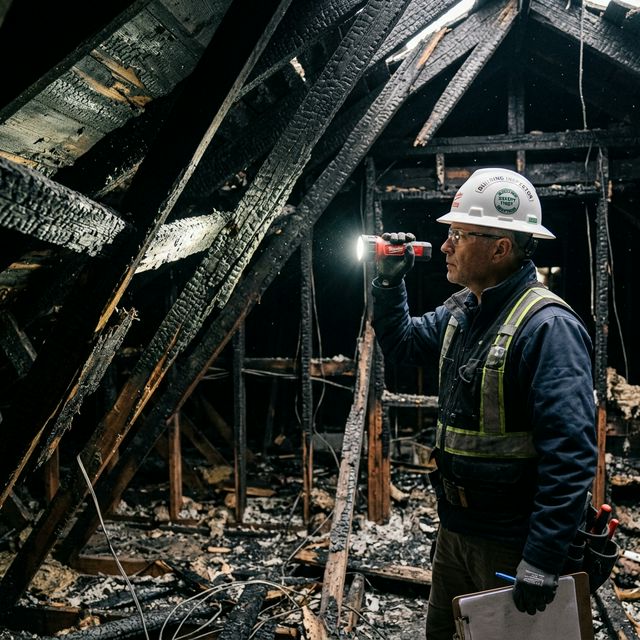
Step 3: The Deep-Dive Inspection The adjuster - often accompanied by specialized engineers or hygienists - will conduct an exhausted, multi-hour inspection. They will use thermal imaging and soot swab kits to uncover damage that is invisible to the naked eye.
Step 4: Compiling the "Master Proof of Loss" They will build a massive, highly detailed Xactimate estimate. This document will be hundreds of pages long, detailing the exact local labor cost of every single screw, gallon of paint, and hour of specialized soot remediation required.
Step 5: Direct Negotiation with the Insurer Your adjuster presents the Proof of Loss to the insurer and assumes all negotiation. They will debate line items, leverage state building codes (Ordinance and Law), and fight back against aggressive depreciation tactics.
Step 6: The Final Settlement Once a maximum value is reached, your adjuster helps release the funds to you, allowing you to hire the restoration contractors of your choice to rebuild your home.
16. Frequently Asked Questions About Fire Claims
Can I hire my own contractor instead of the insurance company's preferred vendor? Absolutely. You are under no legal obligation to use the insurer's recommended contractor. A public adjuster secures the financial settlement for you; once you have the funds, you hold the power to hire any licensed, vetted contractor you trust to perform the repairs.
Will my insurance company drop me if I hire a public adjuster? No. It is a violation of state law for an insurance company to cancel your policy in retaliation for hiring a licensed public adjuster to represent your legal interests.
Do I have to pay taxes on my fire damage insurance settlement? Generally, property insurance settlements are not considered taxable income by the IRS, because the funds are meant to restore you to your pre-loss financial condition, not enrich you. However, you should always consult a tax professional regarding your specific situation, especially with commercial or business interruption claims.
What if I already cashed the initial check from the insurance company? In most states, cashing an initial "undisputed" check does not prevent you from reopening the claim for hidden damages, provided you did not sign a final release of all claims. A public adjuster can review your paperwork to confirm if supplemental funds can still be pursued.
17. Next Steps: Securing a Free, No-Obligation Claim Review
The days following a structural fire are exhausting, disorienting, and highly consequential. The decisions you make now will dictate the financial trajectory of your recovery. You should not have to fight a massive insurance corporation alone while trying to find temporary housing and piece your life back together.
If you suspect your fire claim is being undervalued, delayed, or improperly managed, you deserve to know the true worth of your policy.
At PublicAdjusterSelect.com, we connect you with deeply experienced, fully vetted fire damage public adjusters. The initial review is entirely free, and you pay nothing upfront. Simply submit your information below, and a dedicated expert will contact you within 24 hours to review your claim and outline your best path forward.