
Comprehensive Hail Guide
- 1. Hail Damage Claims: The Fight Over Functional vs. Cosmetic Loss
- 2. The Blunt Truth Summary (BLUF)
- 3. What Actually Happens During a Hail Claim
- 4. Immediate Action Steps After a Severe Hailstorm
- 5. Common Traps and Tactics in Hail Claims
- 6. The Roles: Roofer vs. Public Adjuster
- 7. The Empirical Data: Why Representation Matters
- 8. Public Adjuster Pros and Cons for Hail Claims
- 9. Hidden Damages the Insurer Wants You to Miss
- 10. When is the Right Time to Hire Help for a Hail Claim?
- 11. Policy Limitations, Loopholes, and the 1-Year Filing Limit
- 12. The Financial Reality: Fees vs. Valued Added
- 13. How to Vet a Legitimate Hail Claim Public Adjuster
- 14. Real-World Scenario: The "Cosmetic" Metal Roof Denial
- 15. The Step-by-Step Public Adjuster Hail Process
- 16. Frequently Asked Questions About Hail Claims
- 17. Next Steps: Securing a Free, Expert Claim Review
1. Hail Damage Claims: The Fight Over Functional vs. Cosmetic Loss
Hail is arguably the most insidious and widely disputed form of property damage in the insurance industry. Unlike a fire or a massive flood, severe hail damage is often completely invisible from the ground. A homeowner might notice a few dented gutters or cracked window screens and assume their home escaped largely unscathed. Meanwhile, on the roof, thousands of high-velocity ice impacts have critically compromised the waterproofing integrity of their entire shingle system.
Insurance companies love hail claims because they are incredibly easy to underpay. Their standard tactic is to dismiss the loss as purely "cosmetic," arguing that while the roof looks beaten up, it still sheds water. They rely on the fact that most homeowners will simply accept this visual assessment without demanding a forensic engineering analysis.
2. The Blunt Truth Summary (BLUF)
Here is what you must understand about hail damage claims:
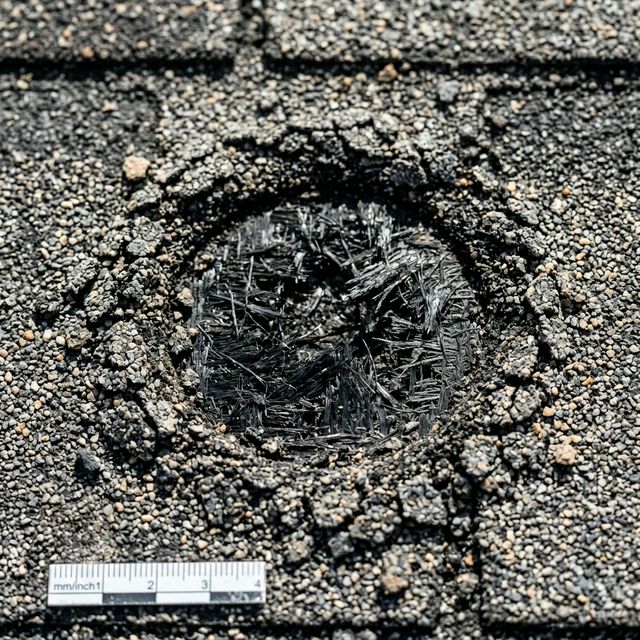
- The Granular Loss Argument: Hail forcefully strips the protective ceramic granules off asphalt shingles, exposing the asphalt layer to ultraviolet (UV) degradation. Insurers will claim this is normal "wear and tear." A public adjuster proves it is sudden, accidental storm damage requiring total replacement.
- The Cosmetic Endorsement Trap: Many modern policies sneak in a "Cosmetic Damage Exclusion," stating they will not pay to replace dented metal roofs or siding if the dents do not inhibit the material's function. Overcoming this requires highly technical interpretation of the policy language.
- Storm Chaser Roofers vs. Public Adjusters: After a hailstorm, neighborhoods are flooded with out-of-state roofing salespeople knocking on doors. Roofers can build roofs, but it is a felony in many states for a roofer to negotiate an insurance policy on your behalf. Only a licensed public adjuster can legally represent your financial interests.
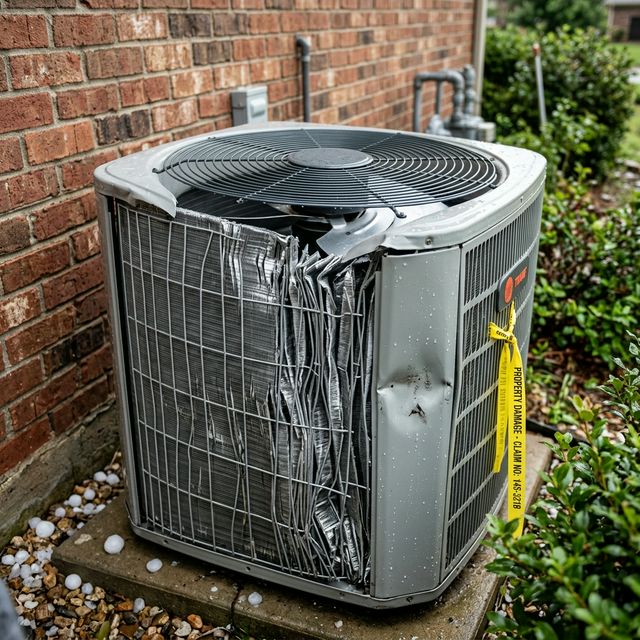
- Soft Metal Damage: Hail permanently destroys "soft metals" - AC condenser fins, aluminum window wraps, gutters, and exhaust vents. Adjusters frequently omit these from the initial estimate entirely.
3. What Actually Happens During a Hail Claim
Filing a massive hail claim triggers a very predictable response from the carrier, usually culminating in a severely underpriced estimate.
The Independent Adjuster (IA) Deployment: After a major storm, the carrier hires third-party independent adjusters (IAs). These IAs are paid per claim and are managing dozens of roofs a day. They spend 15 minutes on your roof, draw a 10x10 foot "test square" with chalk, count the obvious hits, and ignore everything else.
The "Repair vs. Replace" Battle: Even if the IA finds severe damage, the desk adjuster inside the insurance company will often override their recommendation and issue a check for a "repair" (replacing 20 individual shingles) instead of buying you the full new roof your policy entitles you to.
The Depreciation Game: Roofs are heavily depreciated based on age. The insurer will argue your 15-year-old roof was nearing the end of its life anyway, slashing your ACV (Actual Cash Value) payout to a fraction of the actual cost to install a new roofing system today.
4. Immediate Action Steps After a Severe Hailstorm
Hail damage rarely causes immediate catastrophic interior leaking, but failing to act locks you out of your claim.
- Do Not Sign a Roofer's AOB: Door-knocking roofers will pressure you to sign an "Assignment of Benefits" (AOB) or a "Contingent Contract." This legally signs over all your insurance rights to the roofer. Never do this. Keep control of your own claim money.
- Document the Ground Damage: Before the ice melts, take photos of the hailstones next to a coin or a tape measure. Photograph dented BBQ grills, shattered patio furniture, and damaged window screens. This creates an indisputable forensic timeline of the storm's severity.
- Hire a Public Adjuster First: Before the insurance company sends their hurried IA, bring in a public adjuster to perform a rigorous, hour-long roof inspection utilizing macro photography and chalk highlighting.
5. Common Traps and Tactics in Hail Claims
Insurers have developed sophisticated methods to deny valid hail claims.
The "Marring vs. Bruising" Tactic: Insurers will look at a perfectly circular dent in a shingle and classify it as "marring" (cosmetic), rather than "bruising" (where the fiberglass mat beneath the asphalt is fractured). You need a public adjuster to physically lift the shingle and photograph the fractured matting underneath to force coverage.
The Manufacturer Defect Excuse: If your shingles are showing signs of blistering or thermal cracking, the insurer will point to these as "manufacturer defects" and use them as an excuse to deny the actual hail damage entirely.
Ignoring Siding and Windows: Hail driven by 60mph winds hits horizontally. It destroys vinyl siding (cracking it) and dents aluminum cladding around windows. Adjusters frequently "forget" to walk the perimeter of the house, focusing solely on the roof.
| Action | Roofing Salesman | Licensed Public Adjuster |
|---|---|---|
| Building the Roof | Yes | No |
| Legal Right to Negotiate Policy | No (UPL Felony in many states) | Yes |
| Recovering Depreciation & Code Upgrades | Rarely understands complex policy limits | Core duty to maximize final settlement |
6. The Roles: Roofer vs. Public Adjuster
The single biggest mistake homeowners make after a storm is relying on a roofer to handle their insurance claim.
The Roofer: A roofer is a construction contractor. They want to sell you a roof. In many states (like Texas and Florida), they are legally prohibited from arguing policy language, debating depreciation schedules, or negotiating the scope of interior damage with your insurance company. They often settle for whatever the insurer offers just to get the job started.
The Public Adjuster: We are licensed insurance and financial experts representing you. We handle the roof, the ruined AC units, the dented siding, the interior water stains, and the complex depreciation math. We tell the roofers exactly how much money is available to build the roof after we force the insurer to pay the maximum.
7. The Empirical Data: Why Representation Matters
Industry data consistently shows that initial hail claims filed by unrepresented homeowners are systematically underpaid by 40% to 60%.
An insurance adjuster's initial estimate usually includes standard architectural shingles and basic labor. A public adjuster's forensic estimate includes the tear-off of the old roof, steep-charge hazard pay for the workers, ice and water shield membranes, local permit fees, overhead and profit (O&P), and premium ridge capping. This specialized quoting methodology frequently turns a $12,000 lowball offer into a $32,000 total roof replacement.
8. Public Adjuster Pros and Cons for Hail Claims
The Pros:
- Overturning Denials: We frequently step in after an insurer has claimed "zero functional damage" or "wear and tear," utilizing meteorological data and engineering reports to completely overturn the denial into a full replacement.
- Comprehensive Scoping: We find the collateral damage the insurer ignores, protecting your property value holistically.
The Cons:
- Slower Timeline: Fighting the carrier to force a total replacement takes longer than simply accepting their fast, cheap repair offer. A great public adjuster focuses on maximum payout, not maximum speed.
9. Hidden Damages the Insurer Wants You to Miss
Hail claims are rarely confined to just the shingles. An intense storm devastates the entire exterior envelope of your property.
- AC Condenser Fins: Central air conditioning units sit outside. Hail completely flattens the delicate aluminum fins that surround the unit, destroying its ability to dissipate heat. Insurers will offer "fin combing" (trying to bend them back), which rarely works and voids warranties. A public adjuster fights for total coil or unit replacement.
- Vinyl Siding Fractures: Hail impacts on vinyl siding often create small, invisible micro-fractures. In the winter, completely hidden behind the naked eye, these fractures expand and split. The siding is functionally dead, and must be replaced.
- Fascia and Window Wraps: The custom-bent aluminum (coil stock) covering your wood trim and windows is heavily dented in a storm. Insurers routinely leave this off the estimate because it requires highly specialized, expensive labor to detach and reset.
10. When is the Right Time to Hire Help for a Hail Claim?
Ideally, before you officially file the claim.
If you call the insurer immediately, they will ask you recorded questions designed to limit your coverage. They might ask, "Did you notice any existing damage before the storm?" If you answer incorrectly, you jeopardize the claim. By hiring a public adjuster first, we inspect the property, confirm the damage is legitimately storm-related, legally file the claim on your behalf, and control all communication with the carrier from Day 1.
If you have already filed and received a terrible "repair only" estimate, a public adjuster can step in, demand a re-inspection, and invoke the Appraisal clause to force a fair settlement.
11. Policy Limitations, Loopholes, and the 1-Year Filing Limit
Your homeowner's policy is packed with technicalities designed to quietly kill your hail claim.
Strict Time Limits: Unlike interior water damage which you notice immediately, hail damage can sit unnoticed on a roof for months. Many modern policies feature a strict 365-day limit to file a wind or hail claim after the date of the storm. If you discover the damage on day 366, your claim is instantly denied.
Matching Legislation Exclusions: If hail destroys one slope of your roof, the insurer may only pay to replace that single slope. But what if those exact shingles are discontinued? You end up with a two-toned, Frankenstein roof that destroys your home's curb appeal. A public adjuster utilizes specific state "matching statutes" and policy language to force the insurer to replace the entire roof to ensure a uniform appearance.
12. The Financial Reality: Fees vs. Valued Added
Why pay a public adjuster a percentage of your roof claim when a roofer offers to do the work for "free" (often illegally eating your deductible)?
Because the roofer is working off the insurance company's estimate. If the insurer says the roof costs $14,000, the roofer cuts corners to build it for $14,000. A public adjuster independently values the roof at the correct market price—often $25,000. Even after subtracting a 10% representation fee ($2,500), you have $22,500 available to hire a premium, high-quality contractor who will install top-tier materials and honor their warranties.
13. How to Vet a Legitimate Hail Claim Public Adjuster
The hail industry is full of transient salespeople. You need a dedicated, licensed expert.
- Appraisal Experience: Hail claims frequently go to Appraisal when the insurer refuses to budge. Ensure your public adjuster has extensive experience managing the formal Appraisal process and selecting dominant, aggressive appraisers.
- Meteorological Data Access: A great adjuster doesn't just look at the roof; they pull hyper-localized CoreLogic or HailTrace Doppler radar reports to definitively prove to the insurer the exact size and velocity of the hail that hit your specific address.
- Strict Code Upgrade Knowledge: When replacing a roof, local building codes often require upgrades (like newly mandated ice and water shields). The public adjuster must know how to trigger your "Ordinance & Law" coverage to force the insurer to pay for these expensive code upgrades.
14. Real-World Scenario: The "Cosmetic" Metal Roof Denial
The Situation: A devastating hailstorm dents an expensive, $60,000 standing seam metal roof. The insurer acknowledges the storm happened but issues a zero-dollar payout, citing their "Cosmetic Damage Exclusion," stating the roof is ugly but still physically stops rain.
The Insurer's Playbook: They rely on the visual definition of cosmetic damage to save tens of thousands of dollars, assuming the homeowner cannot scientifically prove the metal's function is compromised.
The Public Adjuster's Solution: We deploy an independent metallurgist. The engineer proves that the severe impacts stretched and thinned the metal (panel elongation) and shattered the microscopic factory Galilean coating, meaning the roof will succumb to premature rust and failure within 5 years. By proving the damage altered the longevity and physics of the roof, the cosmetic exclusion is defeated, and the $60,000 replacement is secured.
15. The Step-by-Step Public Adjuster Hail Process
We execute a flawless, militaristic process to tear down the insurance company's lowball estimates.
- Forensic Inspection & Chalking: We grid the roof into test squares and use specialized chalk to circle and document every single granular bruise, severely dented soft metal, and shattered siding panel.
- Meteorological Correlation: We purchase advanced Doppler radar reports to correlate our physical findings with the exact date of loss, removing the insurer's ability to claim the damage is from a prior, expired storm.
- The Comprehensive Xactimate: We generate a master estimate that includes every required code upgrade, steep-pitch hazard pay, detaching and resetting satellite dishes, and premium architectural shingles.
- Negotiation & Engineer Confrontation: If the insurer sends an engineer to write a biased "no damage" report, we aggressively counter them with our own independent engineering and metallurgical data.
- Final Settlement or Appraisal: We force the maximum settlement at the desk, or we push the claim into the legal Appraisal process, removing the biased desk adjuster from the equation entirely and securing your final award.
16. Frequently Asked Questions About Hail Claims
Will filing a hail claim increase my premiums or cancel my policy?
In most states, it is strictly illegal for an insurance company to single you out and raise your premium or drop you for filing an "Act of God" weather claim like hail. They will likely raise rates across the entire zip code regardless of whether you file or not, so you are paying for the storm either way.
My roofer said I don't need to pay my deductible. Is this legal?
No. In places like Texas, Florida, and increasingly nationwide, a contractor offering to "eat" or waive your deductible is committing felony insurance fraud. If the insurer catches wind of this, they will void your claim entirely. Always pay your deductible and use a public adjuster to maximize the gross payout.
The adjuster said my roof only needs a repair, not a replacement. What do I do?
Do not accept it. Asphalt shingles seal together over time. If a contractor attempts to pry up 20 damaged shingles to replace them, they will inevitably tear and destroy the surrounding healthy shingles (a process called "unrepairability"). A public adjuster forces the insurer to acknowledge this and pay for a total replacement.
17. Next Steps: Securing a Free, Expert Claim Review
Hail damage represents the single greatest threat to your property's value, and insurers employ their most aggressive cost-cutting tactics to deny these claims.
Do not let an overwhelmed, 15-minute inspection by a biased independent adjuster determine the financial fate of your home. Reach out to our elite team of licensed public adjusters for a completely free, zero-obligation consultation. We will conduct a forensic roof and exterior evaluation, deploy advanced weather data, review your policy exclusions, and fight to ensure your home is restored with the premium materials and workmanship you deserve.