
Comprehensive Hurricane Guide
- 1. Hurricane Claims: The Truth About Denials, Wind vs. Flood, and Your Rights
- 2. The Blunt Truth Summary (BLUF)
- 3. What Actually Happens During a Hurricane Claim
- 4. Immediate Action Steps to Protect Your Property Post-Storm
- 5. Common Traps and Tactics in Hurricane Claims
- 6. The Roles: Independent Adjuster vs. Public Adjuster
- 7. The Empirical Data: Why Representation Matters in Disasters
- 8. Public Adjuster Pros and Cons for Hurricane Claims
- 9. Hidden Damages the Insurer Wants You to Miss
- 10. When is the Right Time to Hire Help for a Hurricane Claim?
- 11. Policy Limitations, Loopholes, and the Hurricane Deductible
- 12. The Financial Reality: Fees vs. Valued Added
- 13. How to Vet a Legitimate Hurricane Claim Public Adjuster
- 14. Real-World Scenario: The "Wind vs. Flood" Trap
- 15. The Step-by-Step Public Adjuster Hurricane Process
- 16. Frequently Asked Questions About Hurricane Claims
- 17. Next Steps: Securing a Free, Expert Claim Review
1. Hurricane Claims: The Truth About Denials, Wind vs. Flood, and Your Rights
A hurricane doesn't just devastate your physical property—it triggers a grueling, complex financial battle with your insurance company. When catastrophic storms hit, insurers are suddenly liable for billions of dollars across thousands of local claims. Their immediate, corporate mandate is damage control: minimizing payouts, delaying investigations, and aggressively limiting their financial exposure.
You see a destroyed home or business; they see a ledger. They actively use sophisticated "wind vs. flood" clauses, strict hurricane deductibles, and overloaded, fatigued independent adjusters to undervalue your loss. Surviving the storm was the first hurdle; surviving your insurance company is the second. You have the fundamental right to demand every dollar required for a full recovery, and bringing in a dedicated public adjuster ensures you don't fight a billion-dollar entity alone.
2. The Blunt Truth Summary (BLUF)
Here is the absolute bottom line regarding your hurricane claim:
- They Will Blame the Water: Expect your insurer to aggressively apply the "Anti-Concurrent Causation" clause, claiming the damage was caused by flooding (which they don't cover) rather than wind (which they do).
- The Adjusters Are Overwhelmed: After a major hurricane, the independent adjuster sent to your home is likely an out-of-state contractor handling 15+ claims a day. They do not have the time—or the training—to scope hidden structural fatigue.
- You Are Entitled to Upgrades: If your local building codes have changed since the property was built, your insurer may be legally mandated to pay for entire systemic upgrades under "Ordinance & Law" coverage, but they will never volunteer this information.
- Expertise Pays: Policyholders who utilize a licensed public adjuster for catastrophic claims secure payouts that are demonstrably higher—often over 7x higher—than those who blindly accept the initial corporate offer.
3. What Actually Happens During a Hurricane Claim
The timeline of a hurricane claim is fundamentally different from an isolated property loss due to the sheer volume of regional destruction. Understanding the insurer's playbook is critical:
Phase 1: The Bottleneck. You file a claim, but because the system is overloaded, it may take weeks for an adjuster to arrive. During this time, secondary damage (mold, rotting) accelerates.
Phase 2: The "Drive-By" Scope. An exhausted, independent adjuster finally arrives. They spend 45 minutes walking the property, taking superficial photos of obvious damage, intentionally ignoring roof uplift, structural shifting, and interior water mapping.
Phase 3: The Mitigation Dispute. The insurer scrutinizes your emergency mitigation vendor bills, arguing you spent "too much" on water extraction or tarping, and attempts to cap the reimbursement.
Phase 4: The Lowball Offer. Months later, you receive an estimate that barely covers 30% of actual repair costs. The estimate relies on deflated, standardized pricing software (like Xactimate) that doesn't account for post-hurricane material shortages or contractor price surging.
4. Immediate Action Steps to Protect Your Property Post-Storm
Your actions in the first 72 hours dictate the trajectory of your entire claim. Insurance policies contain strict clauses requiring you to "mitigate further damage"—failure to do so gives them grounds for denial.
- Secure the Envelope: Immediately arrange for emergency tarping of the roof and boarding up of shattered windows to stop ongoing water intrusion.
- Document Before Debris Removal: Do not throw away damaged property, drywall, or carpets until you have painstakingly photographed and videoed every destroyed item in its original location.
- Separate Wind and Flood Evidence: If storm surge was involved, clearly photograph the interior "water line" on the walls to delineate what was damaged by rising water versus what was damaged by wind-driven rain entering from the roof.
- Do NOT Sign Away Your Rights: Desperate for help, many owners sign an "Assignment of Benefits" (AOB) with the first contractor who knocks on the door. This legally transfers control of your claim to the contractor. Never sign an AOB.
5. Common Traps and Tactics in Hurricane Claims
Insurers have spent decades refining legal loopholes to avoid paying out massive hurricane losses. You must be prepared for these coordinated tactics:
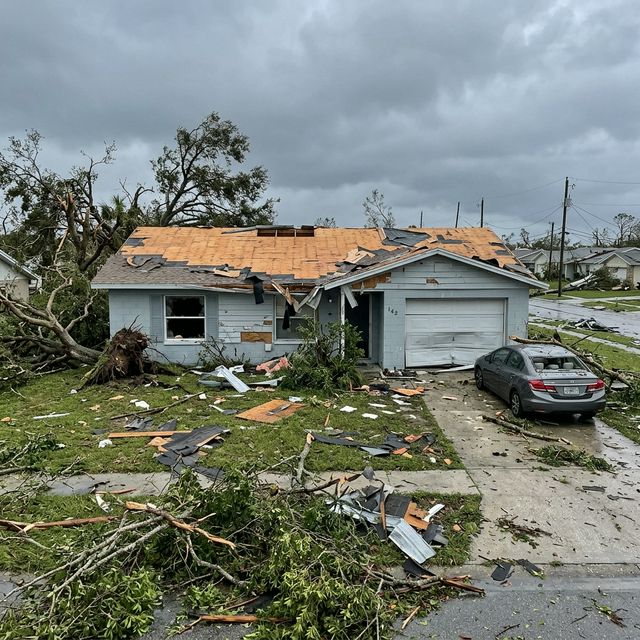
The Anti-Concurrent Causation Clause: This is the insurer's deadliest weapon. It states that if damage is caused by a combination of a covered peril (wind) and an excluded peril (flood), the entire loss can be denied. If the roof blew off, but the first floor flooded, they will try to attribute all interior damage to the flood.
Pre-Existing Damage Allegations: If you have an older roof, they will claim the shingles failed due to "age, wear, and tear," completely ignoring that a Category 4 hurricane just hovered over your house with 140mph winds.
Water Intrusion Without Broken Glass: During a hurricane, extreme wind forces bend window frames and push rainwater horizontally through tiny gaps. Insurers routinely deny these interior water claims, stating that because a physical object didn't shatter the glass (creating an "opening"), the water damage is excluded.
6. The Roles: Independent Adjuster vs. Public Adjuster
Do not confuse the person the insurance company sends to your house with someone who is there to help you.
The Independent/Company Adjuster: They are hired, paid, and directed by the insurance company. Their internal performance metrics are often tied to how quickly they process claims and how tightly they control payout severity. They are specifically trained to look for exclusions.
The Public Adjuster: A state-licensed advocate uniquely authorized to represent you, the policyholder. They do not work for the insurer. They are forensic experts in construction, estimating, and policy law whose sole objective is to legally maximize your settlement and ensure complete structural restoration.
7. The Empirical Data: Why Representation Matters in Disasters
Catastrophic claims require catastrophic funding. The Office of Program Policy Analysis and Government Accountability (OPPAGA) conducted massive studies following major hurricane seasons, analyzing thousands of residential and commercial claims.
The conclusive data revealed that policyholders who retained a licensed public adjuster received settlements exceptionally higher than those who handled the claim alone—frequently resulting in 7x Higher Payouts. When faced with a 100-page policy document, an exhausted insurance adjuster, and a destroyed home, professional representation ceases to be a luxury; it is the only viable path to genuine financial recovery.
8. Public Adjuster Pros and Cons for Hurricane Claims
Hiring a public adjuster is a major financial decision. Here is a transparent look at the reality of representation:
The Pros:
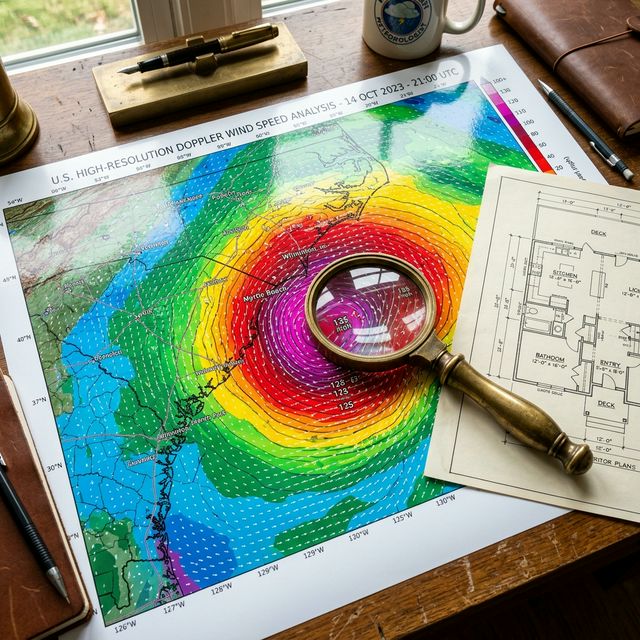
- Meteorological Forensics: We utilize localized Doppler radar data and certified meteorological engineers reports to fundamentally prove that the wind speed at your exact address was severe enough to cause the alleged damage.
- Leveling the Playing Field: You instantly gain an expert who speaks the insurer's language, utilizes the same Xactimate estimating software, and knows how to counter their specific denial algorithms.
- Stress Alleviation: We take over all emails, adversarial phone calls, 100-page evidence requests, and tedious negotiations, allowing you to focus on your family or business operations.
The Cons:
- The Contingency Fee: Public adjusters are paid a percentage of the total settlement (usually between 10% and 20%, capped by state law during declared states of emergency). However, since they routinely scale the gross payout exponentially, the net check to the client is significantly larger even after the fee is deducted.
9. Hidden Damages the Insurer Wants You to Miss
A hurricane's kinetic energy ravages a property in unseen ways. If you only claim what is immediately visible, you are leaving tens of thousands of dollars on the table and risking the structural integrity of your home.
- Structural Fatigue and Racking: Sustained 120+ mph winds push against the broad side of a house, warping the internal wooden frame. This subtle "racking" strains the trusses and shifts drywall connections. Insurers never test for this voluntarily.
- Broken Window Seals: High wind pressures flex glass panes to their breaking point. Even if the glass doesn't shatter, the thermal argon gas seals pop. Weeks later, the window becomes permanently fogged and must be completely replaced.
- Micro-Fissures in Stucco: Wind-driven debris and pressure fluctuations create microscopic hairline cracks in exterior stucco. In subsequent rainstorms, water penetrates these fissures, leading to hidden rot and catastrophic interior mold behind the walls.
10. When is the Right Time to Hire Help for a Hurricane Claim?
Immediately. Day 1.
The absolute biggest mistake property owners make is waiting to see "what the insurance company will offer first." When you allow the insurer's independent adjuster to conduct the initial, unsupervised inspection, they dictate the narrative. They will photograph pre-existing wear, attribute roof damage to age, and lock in a baseline estimate that is incredibly difficult to overturn later.
By hiring a public adjuster immediately, your expert dictates the narrative. We conduct the initial, forensic scope. We write the comprehensive estimate. We present the undeniable evidence of wind damage before the insurer has a chance to build a case for denial. Proactive representation is always financially superior to reactive damage control.
11. Policy Limitations, Loopholes, and the Hurricane Deductible
Standard homeowners and commercial policies drastically shift the financial burden onto you during a named storm.
The Calendar Year Hurricane Deductible: Unlike a standard $1,000 flat deductible, hurricane deductibles are typically 2%, 3%, or even 5% of your home's total insured value (Coverage A). If your home is insured for $500,000 with a 5% deductible, you must pay the first $25,000 of damage out of pocket. Many insurers will maliciously write estimates that conveniently total $24,500—just below your deductible—so they owe you nothing.
Ordinance and Law (Code Upgrade) Traps: After a storm, the county may require you to elevate your home, upgrade to impact windows, or install a completely new roofing system to meet updated hurricane building codes. Insurers will refuse to pay for these expensive mandatory upgrades unless you aggressively exercise your "Ordinance & Law" policy rider.
12. The Financial Reality: Fees vs. Valued Added
Insurance companies love to warn policyholders against hiring public adjusters, claiming they will "take a cut of your money." The mathematical reality tells a completely different story.
If an insurer organically offers $30,000 for severe hurricane damage, and a public adjuster utilizes forensic engineering, meteorology reports, and line-item auditing to fight for a justified $140,000 settlement, the 10% or 15% fee is paid exclusively from the newly generated funds. Your net recovery is monumentally higher, and you can actually afford to rebuild your property properly rather than resorting to cheap patchwork.
13. How to Vet a Legitimate Hurricane Claim Public Adjuster
After a catastrophe, "storm chaser" adjusters and contractors flood the region. To protect yourself, demand strict vetting:
- State Licensure & Surety Bond: Verify their license is active and in good standing with the state's Department of Financial Services.
- Local Expertise: Do they understand the specific regional building codes and local municipality permit requirements?
- Forensic Resources: Can they immediately deploy thermal imaging cameras, drone mapping units, and independent structural engineers to combat the insurer's experts?
- Communication Transparency: Will they provide you with real-time access to the claims diary and all correspondence with the insurer?
14. Real-World Scenario: The "Wind vs. Flood" Trap
The Situation: A coastal home is struck by a Category 3 hurricane. The roof is partially torn off, and an hour later, a 4-foot storm surge floods the living room. Total damage: $250,000.
The Insurer's Playbook: The company denies the claim entirely. They invoke the Anti-Concurrent Causation clause, stating that because flooding (excluded) occurred simultaneously with wind (covered), the entire loss is voided.
The Public Adjuster's Solution: We deploy structural engineers to prove the chronological timeline of destruction. We demonstrate, using meteorological radar data and specialized moisture mapping on the upper walls, that the wind destroyed the roof and ruined $80,000 worth of interior property before the floodwaters ever breached the doorstep. We force the insurer to pay the $80,000 wind claim.
| Factor | Wind/Hurricane Policy (Covered) | Flood Policy (Excluded) |
|---|---|---|
| Source | Falling rain, wind-driven rain, airborne debris | Rising rivers, tidal surge, expanding lakes |
| Entry Point | Top-down (roof, broken windows) | Bottom-up (under doors, rising up walls) |
| Adjuster Tactic | Insurer attempts to reclassify this as flood | Insurer eagerly approves this denial |
15. The Step-by-Step Public Adjuster Hurricane Process
We do not guess. We execute a militaristic, data-driven methodology to overwhelm the insurer with absolute proof.
- Policy Analysis: We dissect your declarations page, deciphering your specific hurricane deductibles, ALE (Additional Living Expenses) limits, and code upgrade coverage.
- Emergency Mitigation Auditing: We ensure your emergency dry-out and tarping contractors are billing correctly so the insurer doesn't reject their invoices.
- Forensic Scoping & Engineering: We utilize drones for roof inspections, thermal cameras for hidden moisture, and secure localized wind-speed affidavits from certified meteorologists.
- Line-Item Estimating: We generate incredibly dense, 50-page Xactimate estimates detailing every nail, drywall sheet, and baseboard required for a total restoration.
- Aggressive Negotiation & Appraisal: We meet the insurer's adjusters on-site, point out the hidden damages they ignored, counter their lowball offers, and push the claim to formal Appraisal or litigation if they operate in bad faith.
16. Frequently Asked Questions About Hurricane Claims
Do I have to use the contractor my insurance company recommends?
Absolutely not. "Preferred vendor" programs are designed to save the insurer money, not to provide you with high-quality craftsmanship. You have the legal right to hire any contractor you choose.
Will filing a hurricane claim make my insurance drop me?
In most coastal states, insurance companies cannot legally cancel or non-renew your policy solely because you filed an "Act of God" weather claim. They base regional drops on overall area risk, not your individual storm claim.
If I already cashed their check, is it too late to hire you?
Usually, no. Unless you signed a final "Release of All Claims" document, your claim can be re-opened for supplementary payments. If you discover hidden damage months after the storm, a public adjuster can demand additional funds.
17. Next Steps: Securing a Free, Expert Claim Review
The days and weeks following a hurricane are chaotic, traumatic, and overwhelming. The absolute worst thing you can do is sign rapid contracts with unvetted storm-chasers or blindly trust an insurance company that is actively trying to mitigate its multi-million dollar regional losses.
Take control of your recovery today. Reach out to our elite team of licensed public adjusters for a completely free, zero-obligation consultation. We will conduct a thorough 360-degree property inspection, review your policy declarations, and give you an unfiltered, honest assessment of what your catastrophic claim is actually worth.