
Comprehensive Mold Guide
- 1. Mold Claims: The Truth About Denials, Policy Caps, and Your Rights
- 2. The Blunt Truth Summary (BLUF)
- 3. What Actually Happens During a Mold Claim
- 4. Immediate Action Steps to Protect Your Property
- 5. Common Traps and Tactics in Mold Claims
- 6. The Roles: Independent Adjuster vs. Public Adjuster
- 7. The Empirical Data: Why Representation Matters
- 8. Public Adjuster Pros and Cons for Mold Claims
- 9. Hidden Damages the Insurer Wants You to Miss
- 10. When is the Right Time to Hire Help for a Mold Claim?
- 11. Policy Limitations, Loopholes, and the Mold Cap
- 12. The Financial Reality: Fees vs. Valued Added
- 13. How to Vet a Legitimate Mold Claim Public Adjuster
- 14. Real-World Scenario: The "Long-Term Leak" Reversal
- 15. The Step-by-Step Public Adjuster Mold Process
- 16. Frequently Asked Questions About Mold Claims
- 17. Next Steps: Securing a Free, Expert Claim Review
1. Mold Claims: The Truth About Denials, Policy Caps, and Your Rights
Mold is the single most heavily restricted and litigated peril in the entire property insurance industry. Following a surge of massive toxic mold settlements in the early 2000s, insurance companies drastically rewrote their policies. Today, they deploy exceptionally aggressive tactics to either deny mold coverage entirely or limit their payout to a fraction of the actual remediation cost.
Because mold is classified as a "maintenance issue" rather than a sudden disaster, insurers possess a powerful built-in bias toward denial. They will immediately attempt to prove that the mold grew due to your prolonged neglect. You have the right to a safe, entirely remediated, and toxin-free home. Navigating a mold claim requires treating the situation not just as a fungal issue, but as a forensic investigation to prove a covered "sudden and accidental" water event, which is exactly why representation is mandatory.
2. The Blunt Truth Summary (BLUF)
Here is what you must know before speaking to your insurance company about a mold problem:
- The "Sudden and Accidental" Prerequisite: Mold is almost never covered on its own. It is only covered if you can absolutely prove that it was the direct result of a covered, sudden water peril (like a burst pipe or a sudden roof leak).
- The Absolute Limits (Caps): Even if your claim is approved, nearly all modern policies feature a strict Absolute Mold Limit—usually capping payouts at $10,000 for total remediation, which is often not enough to cover the hazardous waste removal, let alone putting the drywall back.
- The Pre-existing Defense: Adjusters will instinctively claim the mold has been growing for months, triggering the "long-term seepage" exclusion. You have precisely 14 days from the date of the alleged water breach in most states before coverage is completely voided.
- Toxic Liability: Category 3 organic mold (like Stachybotrys, or "Black Mold") is classified as biohazardous. Cheap "bleach and paint" contractor quotes recommended by the insurer will not legally or medically sanitize your property.
3. What Actually Happens During a Mold Claim
Filing a mold claim initiates a highly scrutinized, adversarial process:
Phase 1: The Initial Interrogation. The adjuster's first phone call is designed to trick you into admitting the leak happened "a while ago." Saying the wrong word here guarantees an instant denial.
Phase 2: The Environmental Hygienist. The insurer may send out an industrial hygienist. While they claim this person is neutral, they are paid by the insurer to sample the air and produce a report suggesting the mold is related to "high interior humidity," not a sudden pipe burst.
Phase 3: The Capped Estimate. The insurer writes an estimate for exactly $10,000 (your policy limit). They tell you to use the money for both the tear-out and the rebuild. In reality, strict IICRC S520 mold remediation protocols often cost $25,000 before a single piece of new drywall is even purchased.
4. Immediate Action Steps to Protect Your Property
Mold spreads in 48 hours. If you suspect an active outbreak tied to a water event, act immediately:
- Stop the Source: Turn off the main water valve if the source is plumbing-related. Document the exact moment and date you discovered the sudden leak.
- Do Not Use Bleach: Bleach does not kill the root structure of porous mold; it only removes the surface color and introduces more moisture (bleach is 90% water). Never disturb dry mold, as it will release millions of spores into your HVAC system.
- Isolate the Area: Close the doors to the affected room and turn off your central air conditioning to prevent cross-contamination of spores into unaffected bedrooms.
- Call an Expert, Not a "Restoration" Company: Do not sign an Assignment of Benefits (AOB) with a rapid-response restoration franchise. They will rapidly exhaust your $10,000 limit testing and tearing out walls, leaving you with no money to rebuild.
5. Common Traps and Tactics in Mold Claims
Insurers utilize very specific, highly successful algorithms to deny mold.
The "Long-Term Seepage" Exclusion: Policies explicitly exclude water damage and subsequent mold that leaks continuously for 14 or more days. The adjuster will look for heavy calcification on the pipe or deep wood rot to argue the leak has been active for six months, voiding the entire claim.
The "Humidity / Lack of Maintenance" Angle: If mold is found in a bathroom or closet, the insurer will argue that you failed to run the exhaust fan or HVAC properly, classifying the mold as a failure to maintain the property rather than a covered water loss.
Isolating the Cap: The insurer will try to classify the entire water cleanup under the $10,000 Mold Cap. A skilled public adjuster will demand that the water extraction and drying ($5,000) is paid under the limitless water dwelling coverage, reserving the restrictive $10,000 cap exclusively for the hazmat mold removal itself.
6. The Roles: Independent Adjuster vs. Public Adjuster
In a mold claim, the adjuster sent to your house is explicitly looking for a reason to say "no."
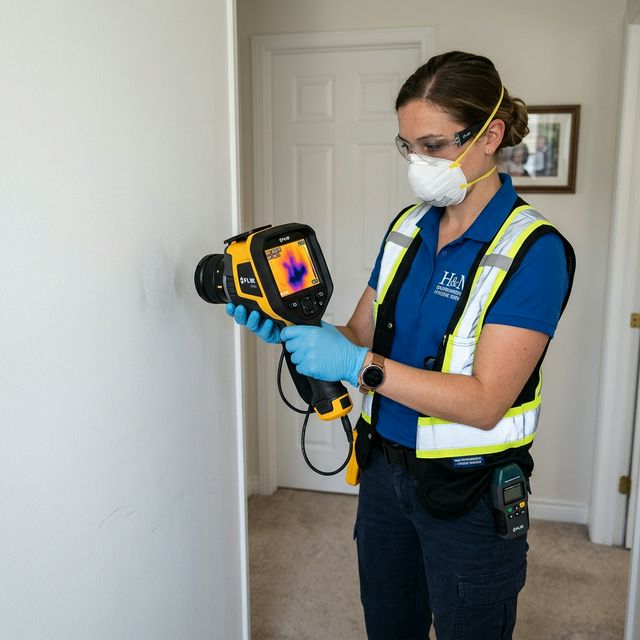
The Independent/Company Adjuster: They are trained to photograph age, rust, and wear. They are looking for reasons why the leak isn't sudden. They will not pull baseboards or use thermal imaging to find hidden colony growth; they only record what they can immediately see.
The Public Adjuster: We are forensic advocates. We don't just look at the mold; we prove the timeline of the water event to guarantee coverage. We utilize certified third-party environmental hygienists whose lab reports prove to the insurer that strict containment and professional abatement are legally required.
7. The Empirical Data: Why Representation Matters
Because of the $10,000 absolute cap on mold, unrepresented property owners almost always run out of money. They hire a cheap contractor who illegally paints over the mold, exposing the family to severe respiratory illnesses and destroying the future resale value of the home.
Professional representation ensures that the main water loss is maximized (which has no financial cap), allowing the restricted mold funds to be used solely for the highly specialized, negative-air containment abatement process. Our involvement routinely prevents policyholders from having to pay $15,000+ out of pocket to make their home medically safe again.
8. Public Adjuster Pros and Cons for Mold Claims
The Pros:
- Strategic Cap Management: We legally separate the water damage (limitless) from the mold damage (capped), ensuring you have enough funding to both destroy the mold and rebuild the house.
- Toxic Proof: We bring in independent, state-licensed environmental hygienists who draft legally binding protocol reports that force the insurer to pay for expensive HEPA-filtration, negative-air machines, and proper clearance testing.
- Coverage Protection: We handle the recorded statements, ensuring you don't accidentally use words like "slow leak" or "always been damp," which guarantee an instant denial.
The Cons:
- Fees: Public adjusters charge a contingency fee based on the settlement. However, when navigating the most dangerous and restrictive peril in modern insurance, the forensic expertise provided radically outpaces the cost.
9. Hidden Damages the Insurer Wants You to Miss
Mold is terrifying because what you see on the surface is usually only 10% of the active colony. A 2-inch spot of mold on the face of your drywall often means the entire dark wall cavity behind it is saturated and infested.
- HVAC Contamination: If mold spores are sucked into your return vents, they colonize the dark, damp evaporator coils of your air conditioning unit. Every time the AC turns on, it blasts toxic bio-aerosols into every room of the house.
- Sill Plate Rot: Mold feeds on organic material (cellulose). The wooden sil plates at the base of your walls are often heavily colonized, compromising the structural framing of your home if not removed or treated with aggressive antimicrobial encapsulates.
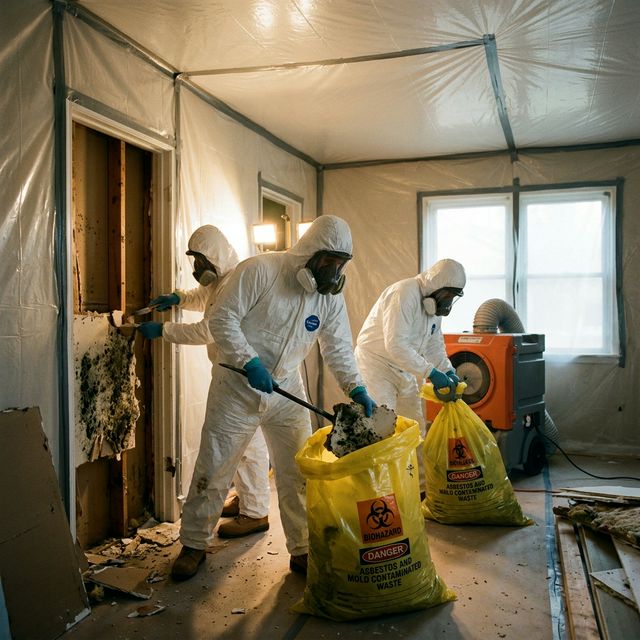
- Insulation Sponging: Fiberglass insulation absorbs contaminated water like a sponge. It cannot be dried or cleaned; it must be treated as hazardous waste, ripped out, and fully replaced.
10. When is the Right Time to Hire Help for a Mold Claim?
Before you call the insurance company.
The very first phone call you make to the insurer is recorded. The claims representative is highly trained to ask leading questions. They will ask: "When did you first notice the stain?" or "Has that pipe been dripping for a while?"
If you answer hesitantly or incorrectly, the claim is permanently denied under the 14-day continuous seepage clause. By hiring a public adjuster first, we review the peril, establish the irrefutable chronological timeline of the sudden water burst, and report the claim on your behalf, completely shielding you from the insurer's interrogation tactics.
11. Policy Limitations, Loopholes, and the Mold Cap
You must understand the absolute mathematical barriers in your policy regarding fungi and microbes.
The $10,000 Absolute Limit: 95% of standard HO-3 policies cap mold remediation and testing at $10,000. This is an aggregate limit, meaning it must cover the tear-out, the air-scrubbing machines, the hazardous waste disposal, the clearance testing, and the rebuild of the affected materials. It is mathematically designed to be insufficient.
The Testing Trap: Insurers will often demand that a hygienist prove the mold is toxic before paying. However, the $1,500 cost for the hygienist is deducted directly from your $10,000 cap, leaving you with even less money to actually fix the problem. We navigate these testing requirements strategically.
12. The Financial Reality: Fees vs. Valued Added
If you have mold, your insurer's goal is to pay $0 by denying the root cause (the water leak). If they can't deny the water leak, their secondary goal is to blend all the expensive water extraction and drying into the restricted $10,000 mold cap.
A public adjuster changes this math entirely. We fight to secure $30,000 under your limitless Coverage A (Dwelling) for the sudden pipe burst and the resulting massive tear-out of soaked materials, preserving the entire $10,000 mold cap exclusively for the final anti-microbial wipe-downs and air scrubbing. Yes, we take a standard percentage fee, but we do so while maneuvering tens of thousands of dollars out of restrictive caps and into open coverage.
| Factor | "Bleach & Paint" (Cheap) | IICRC S520 Remediation (Required) |
|---|---|---|
| Method | Spraying bleach, wiping, painting over it | Physical tear-out of porous materials |
| Containment | None (Spores spread throughout house) | Negative-air HEPA scrubbers & plastic barriers |
| Toxicity Result | Provides only a visual fix; bio-aerosols remain | Passes 3rd-party independent clearance testing |
13. How to Vet a Legitimate Mold Claim Public Adjuster
Because mold is highly regulated and medically dangerous, your public adjuster must be vastly more technical than a standard roof or fire adjuster.
- IICRC Protocol Knowledge: Do they intimately understand the IICRC S520 Standard and Reference Guide for Professional Mold Remediation? Can they read and interpret a third-party laboratory air-sampling result?
- Containment Expertise: Do they know how to calculate the exact cubic feet per minute (CFM) required for negative air scrubbers to ensure the insurer pays for the correct industrial setup?
- Legal Separation: Are they strictly an adjusting firm? In many states, it is illegal for the company executing the physical mold removal to also act as the public adjuster or the clearance tester. Demand absolute separation of duties.
14. Real-World Scenario: The "Long-Term Leak" Reversal
The Situation: A homeowner returns from a 5-day vacation to find the kitchen flooded from a burst refrigerator ice-maker line. Black mold is rapidly growing up the back of the cabinets.
The Insurer's Playbook: The company denies the claim. The adjuster argues that because the mold is black and dense, the ice-maker must have been leaking slowly over several months, triggering the "long-term seepage" exclusion.
The Public Adjuster's Solution: We bring in our forensic plumbers and hygienists. We prove that the ice-maker line suffered a catastrophic, sudden rupture (not a slow drip) and that Stachybotrys (black mold) can reach that density in exactly 5 days when trapped behind a warm, dark, unventilated cabinet space. The denial is aggressively overturned, securing a $45,000 settlement.
15. The Step-by-Step Public Adjuster Mold Process
A mold claim is a precise, scientific operation. We manage the liability from day one.
- Causation Proof: We immediately document and prove the "sudden and accidental" water peril that caused the mold, securing the foundation of your coverage.
- Hygienist Deployment: We deploy an independent environmental hygienist to take tape lifts and air samples, establishing a legally binding protocol for removal.
- Strategic Containment: We audit the remediation company to ensure they construct proper negative-air containment barriers, legally forcing the insurer to pay for these expensive biohazard safety setups.
- Cap Allocation: We meticulously separate the billing. Water extraction goes to your main limit; anti-microbial spraying goes to your mold cap, ensuring maximum financial efficiency.
- Clearance Testing: We ensure the insurer pays until the indoor air quality passes a post-remediation clearance test, guaranteeing your home is medically safe for your family.
16. Frequently Asked Questions About Mold Claims
Can I just spray bleach on the mold and paint over it?
No. This is dangerous and ineffective. Bleach is mostly water and will actually feed the roots of porous mold (like on drywall or wood). Painting over it (even with Kilz) simply hides the toxic bio-aerosols that will continue to off-gas into your home.
Will the insurance company pay for my hotel if there is toxic mold?
Yes. If the mold renders the home uninhabitable (or if massive containment barriers disrupt your living space), we will trigger your Additional Living Expenses (ALE) coverage to provide you with a comparable hotel or rental home.
What is "Clearance Testing"?
It is the final, crucial step. A third-party lab tests the indoor air to ensure the spore count inside the containment area matches the natural spore count of the outdoor air. Do not sign off on a claim until clearance is achieved.
17. Next Steps: Securing a Free, Expert Claim Review
Mold isn't just a property issue—it is a severe health hazard. Your insurance company is incentivized to treat it as a cheap maintenance problem and dismiss your claim entirely.
Do not attempt to navigate the $10,000 absolute caps, the 14-day seepage clauses, and the complex toxic remediation protocols alone. Reach out to our expert team of licensed public adjusters for a completely free, zero-obligation assessment. We will forensically review your policy, inspect the origin of the water, and build an airtight case to ensure your family's home is fully restored and medically sanitized.