
Comprehensive Roof Claim Guide
- Free Claim Review
- 1. Roof Claims: The Truth About Denials, Depreciation, and Your Rights
- 2. The Blunt Truth Summary (BLUF)
- 3. What Actually Happens During a Roof Claim
- 4. Immediate Action Steps to Protect Your Property
- 5. Common Traps and Tactics in Roof Claims
- 6. The Roles: Independent Adjuster vs. Public Adjuster
- 7. The Empirical Data: Why Representation Matters
- 8. Public Adjuster Pros and Cons for Roof Claims
- 9. Hidden Damages the Insurer Wants You to Miss
- 10. When is the Right Time to Hire Help for a Roof Claim?
- 11. Policy Limitations, Loopholes, and the Fine Print
- 12. The Financial Reality: Fees vs. Valued Added
- 13. How to Vet a Legitimate Roof Claim Public Adjuster
- 14. Real-World Scenario: The "Wear and Tear" Reversal
- 15. The Step-by-Step Public Adjuster Process
- 16. Frequently Asked Questions About Roof Claims
- 17. Next Steps: Securing a Free, No-Obligation Claim Review
- Free Claim Review
1. Roof Claims: The Truth About Denials, Depreciation, and Your Rights
Your roof is the primary defense system of your home. When it sustains catastrophic damage from a hurricane, a severe hailstorm, or failing structural integrity after a prolonged leak, the entire house is vulnerable. In the immediate aftermath of a severe storm, you are likely dealing with water intrusion, finding emergency tarps, and waiting anxiously for an adjuster.
It is in this highly stressful window that insurance companies capitalize.
They know you want the repair done quickly. They know you are likely overwhelmed. What most homeowners discover too late is that roof claims are the single most contested, undervalued, and frequently denied category of property insurance claims in the country. The insurance company's goal is to minimize their outlay by proposing patch jobs, aggressive depreciation, and fighting "line of sight" matching rules.
Do not accept a patch when your policy entitles you to a completely new roof.
2. The Blunt Truth Summary (BLUF)
If your roof was severely damaged by a covered peril (like wind or hail), do not assume the insurance company's first offer is final, fair, or sufficient to fund a true replacement. Insurers frequently deploy engineers who are inherently biased toward finding "pre-existing wear and tear" to deny the claim outright, or they offer an Actual Cash Value (ACV) payout so low it barely covers the deductible.
A licensed public adjuster is the only professional legally authorized to represent your financial interests, bypass the insurer's aggressive depreciation tactics, invoke code upgrade provisions, and force the carrier to pay the true, real-world cost of a full roof replacement.
Your insurance company is not your friend, and their adjuster is trained to minimize their employer's liability. You need an advocate whose sole legal and financial obligation is to you.
3. What Actually Happens During a Roof Claim
When you file a roof claim, you are entering a high-stakes financial negotiation where the other side holds all the initial leverage. Here is the reality of the process:
The Dispatched Adjuster The insurer will send an adjuster or a third-party ladder assist company. Their primary directive is to find reasons to minimize the payout. They will look for granule loss, blistering, or improper original installation - anything they can classify as "maintenance issues" rather than sudden storm damage.
The Patching Paradigm If they acknowledge storm damage, their next tactic is the "patch." They will identify 15 blown-off shingles and write an estimate to replace only those 15 shingles, completely ignoring the reality that new shingles will never match the faded color of your existing 10-year-old roof.
The Engineer's Report In high-value claims, the insurer may hire an "independent" structural engineer. These engineers derive the vast majority of their income from insurance carriers. Unsurprisingly, their reports often conclude that the damage was caused by thermal cracking, foot traffic, or manufacturing defects - not the recent catastrophic storm you are claiming.
4. Immediate Action Steps to Protect Your Property
Before engaging in a protracted negotiation over the scope of replacement, you must protect the physical asset. Failing to do so can give the insurer grounds to deny portions of your claim.
1. Mitigate the Damage Immediately Your policy contains a strict "duty to mitigate" clause. If your roof is compromised, you must immediately hire a licensed mitigation company to install temporary emergency tarps or shrink-wrap to prevent interior water damage. Save every receipt; this is a reimbursable expense.
2. Document From the Ground Take extensive photos and videos of your roof from the ground level. Document any torn shingles, scattered debris in the yard, and dented gutters or downspouts. If water has entered the home, excessively photograph the ceiling stains and wet flooring.
3. Do Not Attempt DIY Roof Inspections Do not climb onto a structurally compromised, slippery roof. Aside from the severe physical danger, walking on a damaged roof can cause further granule loss that the insurance company will blame on your "foot traffic" rather than the storm.
4. Do Not Sign AOB Contracts with Roofers Storm-chasing roofers will knock on your door offering "free inspections" if you sign an Assignment of Benefits (AOB). Signing an AOB legally transfers the rights of your insurance policy to that roofer. You lose control of the claim entirely. Never sign an AOB.
5. Common Traps and Tactics in Roof Claims
Understanding the playbook insurers use to suppress roof claim payouts is crucial to fighting back effectively.
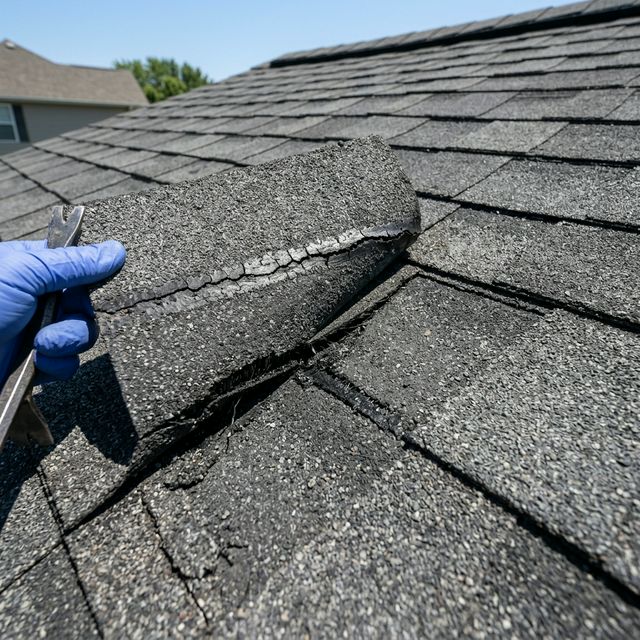
The "Wear and Tear" Denial This is the most common tactic in the industry. The adjuster will agree that shingles are damaged but will classify it as long-term deterioration, blistering from poor ventilation, or age-related wear and tear - none of which are typically covered perils.
The Refusal to Match (Line of Sight Disputes) If your roof is five years old, the manufacturer may no longer produce that exact shingle color. If the insurer only pays to patch the damaged section, you will be left with a glaring, mismatched checkerboard roof that severely deprecates your home's value. In many states, insurers are legally required to provide a uniform appearance, but they will never volunteer this information unless a public adjuster forces the issue.
Ignoring the Substrate Wind and water do not stop at the shingles. Severe storms often lift the decking, tear the underlayment, and compromise the flashing. Adjusters routinely write estimates for "shingles only," completely ignoring the rotting plywood decking underneath that now fails local building codes.
6. The Roles: Independent Adjuster vs. Public Adjuster
When navigating a complex roof claim, the allegiance of the professionals involved is the single most important factor in your outcome.
The Insurance Company's Adjuster Whether they are a direct employee or a contractor called an "independent adjuster," they are paid by the insurance company. Their job is to protect the insurer's bottom line. Their estimates are built using strict corporate pricing models designed to cap payouts.
The Public Adjuster (Your Advocate) A public adjuster is licensed by the state specifically to represent you, the policyholder. They work on a contingency basis, meaning their financial goals are perfectly aligned with yours. They read your policy, independently assess the roof with their own experts, and aggressively negotiate the Xactimate estimate to ensure you receive a full, code-compliant replacement.
| Goal | Roofing Contractor | Public Adjuster |
|---|---|---|
| Focus | Replace the exterior shingles quickly | Maximize the entire claim (interior, code, deck) |
| Policy Expertise | None (Illegal to negotiate policy in most states) | Licensed experts in strict policy interpretation |
| Hidden Damages | Often ignores interior drywall/insulation water damage | Forensically scopes attic, framing, and interior |
7. The Empirical Data: Why Representation Matters
Why not just take the insurer's initial offer and find a cheap roofer to make it work? Because the data proves that unrepresented homeowners leave tens of thousands of dollars on the table.
The Office of Program Policy Analysis and Government Accountability (OPPAGA) conducted an independent study on insurance claim payouts. The results were definitive.
Policyholders who hired a public adjuster for non-catastrophic claims received settlements that were, on average, 574% higher than those who navigated the process alone. In the aftermath of catastrophic events like hurricanes, the difference was staggering: represented policyholders received settlements over 7x higher.
The math is clear. The insurance company's initial offer for a roof claim is almost always a lowball anchor. A public adjuster forces them to the true market value.
8. Public Adjuster Pros and Cons for Roof Claims
Transparency is key. Hiring a public adjuster is an investment in your property's future, but it requires an understanding of the trade-offs.
The Advantages (Pros)
- Maximized Settlements: They consistently secure payouts that dwarf the insurer's initial offers, fully covering the cost of high-quality replacement materials and labor.
- Negotiating Power: They know exactly how to invoke your policy's "Ordinance and Law" coverage to mandate that the insurer pays for expensive, modern code upgrades (like secondary water barriers).
- No Upfront Costs: You pay nothing out of pocket. Their fee is purely contingent upon securing you a successful settlement.
- Expert Documentation: They bring in independent roof inspectors and meteorologists to mathematically prove the wind speeds at your exact address caused the damage, defeating the "wear and tear" argument.
The Trade-Offs (Cons)
- The Contingency Fee: The primary trade-off is the fee (typically 10-20% of the settlement). However, because the final settlement is routinely exponentially larger than the initial offer, the homeowner almost universally nets a vastly superior payout.
- Timeline: Forcing an insurer to replace a $40,000 roof instead of paying a $3,000 patch job takes time. The negotiation process can drag out, requiring patience.
9. Hidden Damages the Insurer Wants You to Miss
Roofs are complex, multi-layered systems. Insurers focus exclusively on the top layer (the shingles or tiles) because that is the cheapest element to replace. However, severe wind or hail almost always compromises the structural integrity underneath. What you cannot see from the ground can destroy your home from within.
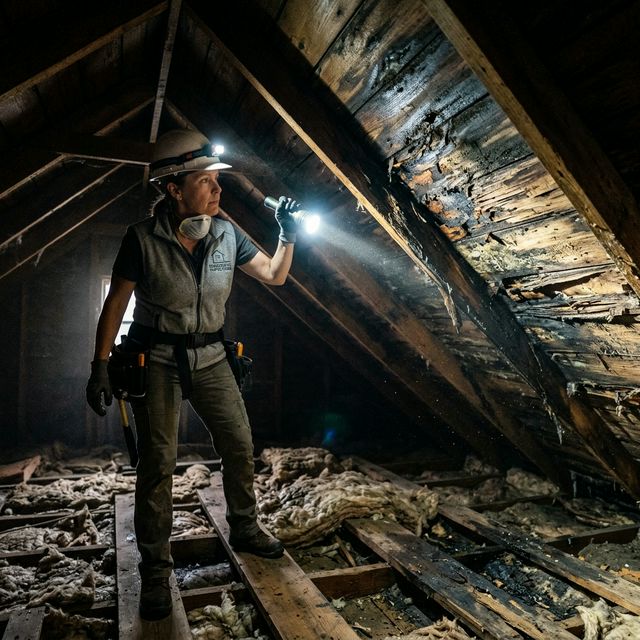
Structural Decking and Trusses When wind lifts shingles, driving rain forces water underneath the underlayment and into the plywood decking. If left untreated, this decking will rot, losing its load-bearing capacity. The insurer's adjuster rarely climbs into the sweltering attic to inspect the underside of the decking for water stains or microbial growth. A localized patch over rotting plywood ensures structural failure within five years.
Attic Insulation and Mold Contamination Water intrusion from a breached roof quickly saturates attic insulation. Wet fiberglass insulation compresses, losing its R-value (insulating property), which permanently spikes your energy bills. Worse, the combination of organic material, heat, and moisture creates a massive breeding ground for toxic mold in the attic space, which then circulates through your central AC vents.
Flashing and Secondary Water Barriers High winds torque the structure, often tearing the metal flashing around chimneys, vents, and skylights. A proper roof replacement requires extensive, precise flashing replacement to ensure these vulnerable joints remain watertight, an expensive line-item insurers frequently omit from their estimates.
10. When is the Right Time to Hire Help for a Roof Claim?
Timing is critical. Engaging a public adjuster at the right moment can save months of frustration and tens of thousands of dollars.
Immediately After the Storm (The Best Strategy) If a massive hailstorm or hurricane has passed through, hiring an adjuster *before* you file the claim is ideal. They orchestrate the emergency tarps (so you do not breach your duty to mitigate), bring their own structural engineers to the very first inspection, and set an anchor estimate that forces the insurer to play defense.
After the "Repair vs. Replace" Dispute If the insurer's adjuster has already inspected the roof and offered an insulting $2,500 check to "patch" the damage or replace a few loose shingles, it is time to bring in an advocate. A public adjuster will demand a re-inspection and bring specialized tools (e.g., brittle tests) to prove the roof cannot be patched without compromising the entire system.
Following an Outright Denial If you received a denial letter citing "wear and tear," blistering, or poor installation, do not give up. Insurers frequently use these templates to deny legitimate storm claims. A public adjuster can reopen the claim, secure historical meteorological data to prove the exact wind speed at your address, and force the carrier to reverse their decision.
11. Policy Limitations, Loopholes, and the Fine Print
Your insurance policy contains sophisticated language designed to protect the insurer's bottom line. You must understand how they will use it against you.
Cosmetic Damage Waivers Many modern policies include a "Cosmetic Damage Exclusion" for metal roofs. If hail severely dents a metal roof but does not puncture it, the insurer will claim the damage is purely "cosmetic" and deny the replacement. A public adjuster works with metallurgists to demonstrate how the dent compromised the anti-corrosive coating, reducing the roof's lifespan and effectively destroying the asset.
Matching Statutes and "Line of Sight" If the insurer offers to replace half your roof, you will be left with a glaringly obvious repair patch because new shingles will never match old, sun-faded shingles. Many states have specific "matching statutes" requiring insurers to provide a uniform appearance, which often means forcing a full replacement if an exact match is no longer manufactured. We fight for full aesthetic restoration.
Ordinance and Law (Code Upgrades) Building codes are constantly updated to require better hurricane strapping, secondary water barriers, and upgraded decking. Standard policies do not cover these expensive upgrades, unless you invoke the "Ordinance and Law" provision. We ensure the insurer pays to bring your new roof into full compliance with today's municipal codes.
12. The Financial Reality: Fees vs. Valued Added
The most pressing question homeowners ask is: "Why give up a percentage of my settlement when I could just use a roofer who will handle the claim for free?"
The answer lies in the legal authority and the final math. Roofers are contractors; it is actually illegal in most states for a roofing contractor to act as a public adjuster and "negotiate" an insurance claim on your behalf. They can only discuss their own estimate.
A public adjuster operates on a contingency fee (typically 10-20%). Because their fee is tied directly to the settlement size, they have a massive financial incentive to find every missing dollar. If an insurer offers you $8,000 to patch the roof, and a public adjuster forces a $45,000 full replacement, the adjuster's fee is easily absorbed. You receive a brand new, code-compliant roof, rather than paying out of pocket when the $8,000 patch fails next year.
13. How to Vet a Legitimate Roof Claim Public Adjuster
Not all adjusters are qualified to handle major roof losses. Generalist adjusters who focus on small plumbing leaks lack the specialized knowledge of building codes, brittle testing, and meteorological data required to defeat a "wear and tear" denial.
When vetting an adjuster, ensure they have:
- Active State Licensing: Verify their credentials with your state's Department of Financial Services.
- A Network of Experts: They must have established relationships with forensic structural engineers and meteorologists who are willing to testify on your behalf if the claim requires litigation.
- No Roofer Kickbacks: Legitimate public adjusters work exclusively for you. They should not mandate that you use a specific roofing contractor in exchange for a kickback.
At PublicAdjusterSelect.com, we strictly vet our entire network, connecting you only with adjusters who meet these elite standards.
14. Real-World Scenario: The "Wear and Tear" Reversal
A homeowner in a hurricane-prone area suffered severe wind damage during a Category 3 storm.
The Insurer's Assessment: The insurer's independent adjuster spent 15 minutes on the roof and concluded the damage was due to "age-related granule loss and thermal blistering," not wind. The claim for a new roof was denied. The Public Adjuster's Investigation: The public adjuster pulled core samples and brought in an engineer. They proved the the adhesive seals on the shingles had been violently broken by uplift forces matching the exact wind speeds recorded during the hurricane. Furthermore, they proved the underlying decking had sustained micro-fractures. The Final Settlement: The insurer was forced to abandon their denial template. The public adjuster negotiated a $52,000 settlement, fully covering a complete tear-off, emergency tarping reimbursement, and high-velocity code upgrades.
15. The Step-by-Step Public Adjuster Process
If you decide to engage an expert, the roadmap to recovery is clear and structured:
1. The Free Claim Review: An adjuster evaluates your policy documents and the roof damage to determine if representation will mathematically benefit you. 2. Forensic Inspection: The adjuster (often with a roofing expert or engineer) conducts deeply detailed inspections, performing brittle tests and documenting lifted shingles perfectly. 3. The Master Estimate: They compile an exhaustive Xactimate estimate detailing every roll of underlayment, drip edge, and flashing required by local code. 4. Aggressive Negotiation: The adjuster handles all correspondence, reinspections, and fierce negotiations with the insurer's representatives. 5. Settlement and Rebuild: Once maximum value is secured, the funds are released to you, allowing you to hire the best local roofing contractor to perform the actual work.
16. Frequently Asked Questions About Roof Claims
Will my insurance premium double if I file a claim or hire a public adjuster? Insurance premiums in storm-prone areas generally rise collectively for entire zip codes following massive weather events. Filing a legitimate claim for sudden, accidental damage does not typically single you out for massive individual hikes, and hiring a public adjuster simply ensures you get paid what you are owed under the contract you already purchased.
Can my insurance company drop me for hiring you? No. It is a strict violation of state insurance laws for an insurer to cancel or non-renew your policy in retaliation for you exercising your legal right to hire a licensed public adjuster.
What if I already cashed a check from the insurance company for a roof patch? As long as you have not signed a "final release" of all claims or let the statute of limitations expire, a public adjuster can likely reopen the claim and file a "supplemental" demand for the true cost of a full replacement.
17. Next Steps: Securing a Free, No-Obligation Claim Review
A compromised roof is a ticking clock. Every time it rains, more water enters your home, leading to catastrophic rot and toxic mold. You cannot afford to let the insurance company dictate the terms of your home's structural integrity.
Do not accept a denial or a patch when your policy entitles you to a full replacement.
At PublicAdjusterSelect.com, we connect homeowners with heavily vetted, elite public adjusters who specialize entirely in major roof and storm claims. The initial policy review and property inspection are completely free, with absolutely no upfront costs.
Submit your information below, and a licensed expert will contact you within 24 hours to execute a strategy that forces the insurance company to honor their contract.